
Comparing apples to apples, at last...

Although I disagree with him on the subjective matter of using 5 mm LEDs as a "real ligh" source, this is definitively worth reading.

The near-term realizable promise of LED for lighting designers and engineers is that it is the one tool that will not only restore their full range of creative options, but that will also give them a bigger canvas to paint on than they ever had before.
The truth is that there are good solid state lighting solutions that are available today for a rapidly growing number of applications. Lighting design innovators realize that, and are investing in their own knowledge-base, and relationships, to effectively pick those winners.
The right knowledge-base will allow designers, specifiers and other decision makers to know what they're looking at, what kind of subjective evaluations to apply, and what questions to ask to assure themselves that what they see is what they'll get, both today and a few years down the road.


Heat is the great enemy of Light emitting diodes (LEDs). This is ironic, since conventional bulbs produce light by heating a filament to such a high temperature that it glows. The most common way for LEDs to fail is by gradual decrease of light output and loss of efficiency. However, sudden failures can occur as well. All caused by excessive heat.
Driving power LEDs on constant current
LEDs use a different principle than incandescent or fluorescent sources to create light. LEDs are semi-conductors diodes that emit light when traversed by a current flow. LED diodes have polarity and, therefore, current only flows in one direction. A photo emission is taking place at the diode junction region when a DC low-voltage, constant current power is applied. Driving power LEDs is relatively simple as, unlike fluorescent or discharge lamps, they do not require an ignition voltage to start. Simply put, too little current and voltage will result in little or no light, and too much current and voltage can damage the light emitting junction of the LED. Consequently, to ensure a proper functioning of a LED light source we need some sort of power supply regulation.


When looking at a typical power LED forward voltage vs. forward current chart, we clearly see that, for a given junction temperature, a small variation of the forward voltage produces a large variation in the forward current. Conversely, as the junction temperature increases, the forward voltage across the LED drops as depicted on the forward voltage vs. junction temperature chart.
If we drive power LED light sources with a regulated constant voltage power supply, the forward current passing through the LED will increases as a result of a forward voltage drop, and in turn will generates additional heat in the junction. Ultimately, if nothing limits the current, the LED junction will fail by over heating.
Instead, by driving power LED light sources with a regulated constant current power supply, the light output and lifetime issues resulting from variation of the forward voltage can be eliminated.
Driving power LEDs for clean light
Luminous characteristics of power LEDs are specified for a specific forward current and a 25°C junction temperature. However most LED light sources are operated well above 25°C, and the “true” light output should be based on the anticipated operating junction temperatures.


As illustrated on the relative luminous flux vs. forward current chart, the light output of increases when the forward current increases. However the efficacy of the light source, expressed in lumens per watt, is adversely affected. Conversaly, the light output from LED light sources decrease with increasing junction temperature, as depicted on the relative luminous flux vs. junction temperature chart.
Therefore, when designing for specific light output, efficacy levels, wavelengths or color temperature, it is important to consider the effects of temperature and to maximize the thermal management of the application.
For a specific LED light source, the forward current may be chosen up to the maximum current recommended by the manufacturer. Driving LED light sources above that maximum may result in lower lumen maintenance or, with excessive currents, catastrophic failure.
High forward currents at elevated temperatures can cause diffusion of metal atoms from the electrodes into the junction’s active region, decreasing the radiative capacity through the creation of dislocations and point defects that produce heat instead of light. High-power LEDs are susceptible to current crowding, non homogenous distribution of the current density over the junction. This may lead to creation of hot spots in the junction, and increases the risk of thermal runaway.
When the epoxy resin used in packaging reaches its glass transition temperature, it starts to expand rapidly, causing mechanical stresses on the semiconductor and the bonded contact, weakening it or even tearing it off.
Higher junction temperatures resulting from increased power dissipation or changes in ambient temperature can have a significant effect on light output. Red and Amber AlInGaP phosphors are more sensitive to temperature effects than Blue and Green InGaN phosphors. Depending on the phosphor type, wavelengths can typically increase from 0.03 to 0.13nm/°C. White LEDs often use one or more phosphors. The phosphors tend to degrade with heat and age, losing efficiency and causing changes in the produced light color and slight shifts in color temperature. Similarly, some materials of the plastic package tend to yellow when subjected to heat, causing partial absorption, and therefore loss of efficiency, of the affected wavelengths.
Early attempts to apply LEDs to general lighting failed because LEDs did not meet the required luminous efficacy or color requirements. Technology has reached a point where using LEDs for general illumination is now a viable option. But, taking over where I left, I believe trying to repurpose existing technologies' lighting fixtures to house LEDs is inappropriate.
LEDs represent a disruptive innovation for the lighting industry. A disruptive innovation is technologically straightforward, using off-the-shelf components put together in a product architecture that is often simpler than previous approaches. These products are usually less capable in the traditional aspects of what is required in established markets, but feature different bundles of characteristics that were not considered important in the past. Applied to LED technology one may think of energy efficiency, resistance to vibration and unidirectional luminous flux, to cite a few.
Conventional approaches to developing power LEDs based general lighting often involve retrofitting existing fixtures to house the new technology. Many early attempts simply used traditional lighting standards and housings instead of investigating the challenges and benefits of LEDs. But LED technology breaks traditional rules, and it quickly become apparent that old thinking cannot be applied. A LED module may physically fit into an existing fixture’s housing, but that housing will not leverage the inherent qualities of power LEDs, mainly because:
Furthermore, power LEDs last a very long time, and the expectations for fixtures' life span are getting higher. Typical specifications for LED lighting fixtures tend toward more durable, longer-lasting products using higher quality materials than those commonly associated with other lighting sources. A state of the art LED module in a cheap fixture would defeats the purpose.
A disruptive innovation is not the same as a radical innovation. A radical innovation is just a major improvement along an existing performance dimension. A disruptive innovation creates a different performance dimension, one that is not particularly important to incumbent firms' most profitable customers. Let’s hope lighting industry experts accept the change and gain a better understanding of how to capitalize on that technology.
There is one recurrent bias in many writings about the coming of age of LEDs for general lighting: the author always assumes the only allowed form factors for LEDs to become successful have to be similar to those of the other light sources technologies we know today. Or to put it more simply, that LEDs are only going to succeed in the “retrofit” market. I take as example this attempt at describing how LED based fixtures are now able to compete with traditional general lighting fixtures.
Beyond the fact that the post speaks a little too much about one single manufacturer to be exhaustive, and try to draw general conclusions based on this narrow view point, I believe it gives a wrong perception of the issues at stake by providing the wrong examples. This is particularly true of the cost based examples. But I am ready to assume this has been caused by jet lag and "red eyes"…
Let’s examine the "much work remains to be done to get the costs down" example. First of all it sounds based on that ubiquitous chart found all over the web comparing luminous efficacy of light sources that everyone makes its own. Let’s say it makes me suspicious when I see a comparison using a "800 lumens" figure as a basis for calculation… But it is more the peremptory conclusion that "cost" must be driven down that makes me uneasy.

After all it is nor fair nor possible to compare the price of an incandescent bulb with a “15-20 watt LED”. Doing so we are not comparing apples to apples, but rather commodities with luxury goods, and ultimately we only propagate marketing BS.
As a matter of fact, the "cost" of this 15-20 watt LED light source is a retail price. Knowing that at semi-gross prices this same light source is coming out at around $27 (without volume discount), the only valid conclusion one can draw from the example is that the retailer is taking a three fold markup. And this cannot be called the cost of LEDs.
Moving on to the “kitchen cans” example, we can repeat the same calculation. This time taking into account the additional elements necessary to create a retrofit light source, namely a constant current driver ($5), an anodized extruded heat sink ($2), an optic ($3), an outer fascia ($1) and fixtures ($1). We are now approaching the $40 for the bill of material. The resulting product will probably be assembled in China, adding another $5 to the cost. Once again the example only demonstrate the three fold margin applied by the retailer on the product.
However, I agree with the author that “only the most elite pocketbooks will open for LEDs” at this price. Like they did for incandescent bulbs when electricity lighting took over from gas lighting… But what a cumbersome way to say that most retailers are pricing LED retrofit light sources as luxury items! Hasn’t it always be the case with emerging technologies?
Nonetheless, to return where I started, I believe the author missed an important point. Power LEDs are a disruptive innovation and trying to mold them into the previous technologies form factors is flawed. LED general lighting will really take off when designers, writers and customers alike will step out of their “incandescent” frame of mind.
Efficacy, power and costs of high power LEDs have now reached levels that make them attractive in general lighting applications.
The luminous efficacy of a light source is the ratio between the emitted luminous flux and the amount of the absorbed energy to transmit it. It is expressed in lumen/watt (lm/W), where the lumen is the measure unit of the luminous flux. However, the lumen is based on the subjective perception of light by the average human vision, corresponding to a particular curve inside the visible spectrum. To put it simply, a standard incandescent light emits radiation both inside and outside the visible spectrum. The radiations emitted in the infrared and in the ultraviolet do not contribute to our perception of brightness. A light source will have a higher luminous efficacy as much as it will be able to emit in a spectrum suitable for the human vision.
The LED technology has made significant progress on the emitted power front. Today standard high power LED are available in 1, 3 and 5 watt, and multi-chip emitters are becoming available that push LED power towards the 15 watt. But above all high power LED have ten times more efficacy than the incandescent sources. Every serious manufacturer offers high brightness LEDs with minimum luminous efficacies well above 80 lm/W. Nowadays 100 lm/W minimum luminous efficacies are quickly becoming the norm for white light.

To quickly illustrate the point, a 60 watt standard light bulb, with a source efficacy of 15 lm/W, produces a luminous flux of 60 x 15 = 900 lumens. A light source built with nine 1 watt high power LEDs, with a luminous efficacy of 100 lm/W will produce the same luminous flux, but will use only a power of 9 watt instead of the 60 watt of the standard light bulb.
For a more accurate comparison between different lighting systems we must take into account the entire system that produces the luminous flux:
Taking into account the entire chain, the efficacy of incandescent lamps will be as low as 7 lm/W, whereas fluorescent will achieve 38 lm/W and high power LEDs reach 76 lm/W. A better evaluation of the electrical power necessary to produce the 900 lumens would give 128 watts in the case of incandescent lamps, 23.8 watt for fluorescent fixtures and 11.8 watts for LEDs. A significant energy saving!
To me a great majority of blog posts talking about LEDs are frankly disappointing. Although some try to take an exhaustive approach at presenting the technology in terms that can be understood by anyone, their content often remains static and academic, often copied from the same source. As these blogs are likely to come on top of the search engines responses, the casual reader may end up drawing the wrong conclusions with regards to the usability of the LEDs technology. Obviously at this point in time it would be biased to present LEDs as “the” perfect, “do-it-all” technology for general lighting. But this is a fast evolving technology, and, as for computer hardware, Moore’s law is applicable: today’s “truth” may become obsolete within a year or two. As a result, one has to remain cautious when presenting LEDs technology strengths and weaknesses.
In general lighting applications LEDs have advantages and disadvantages when compared with other light sources such as incandescent or fluorescent lamps. When looking at the positive side, the most significant advantages are fast turn-on, lower heat generation, lower power consumption, higher operating life, and high resistance to shock or vibration.
On the negative side, many blog have not been updated and retain obsolete information which may induce the casual reader into drawing hasty conclusions. Amongst the recurring limitations these blogs describe are the narrow viewing angle, and the need for electronic driver circuits to operate.
Starting by the later, LEDs need to be driven properly to ensure optimal performance and long life. An effective driver is key in obtaining all the benefits of LEDs. If early driver's implementations made of discrete components were not cost effective, this is not the case anymore. Pushed by the fast adoption of LEDs in the automotive and aeronautical industries, today almost every integrated circuit manufacturer proposes a vast array of LED drivers to suit almost every aspect of general lighting requirements. Furthermore, the leading manufacturers’ constant current sources, which until recently were only able to drive a limited number (usually 3 to 6) of power LEDs have recently been superseded by new affordable sources with 3 to 4 times more capacity.
Let’s now look at the viewing angle. First of all, light emissions from LEDs are inherently directional, thus reducing the need for reflectors and diffusers that can trap light. As a result, general lighting LEDs fixtures can potentially deliver light more efficiently to an intended location, leading to potentially higher application efficiency than other light sources in certain lighting applications. By comparison, fluorescent and incandescent lamps emit light in all directions. In their case, much of the light produced by the lamp is lost within the lighting fixture, reabsorbed by the lamp, or escapes from the fixture in a direction that is not useful for the application. For many fixture types, it is not uncommon for 40-50% of the total light to be lost before it exits the fixture.
Now, if the early generations of power LEDs were exhibiting narrow light emission angles (from 30º to 50º), the latest generations emit light at much larger angles, between 120º and 160º. This cannot be qualified as “narrow” anymore, and opens up new general lighting applications to the use of power LEDs.
Once again, as in too many cases of emerging technologies, the information for the public tends to remain far behind the actual technical advance...
Yesterday as I was reviewing various power LEDs’ technical datasheets, trying to extract useful parameters and feed them to my lighting design software, it struck me how manufacturers use such diverse ways to express the same characteristics of their products.
Luminous efficacy, expressed in lumen/W, is one of the most important parameters for lighting design. But when it comes to high power LEDs, it can be wrongly interpreted. It is probably the result of using a simplified description for these LEDs calling them 1W LEDs.
In effect, the actual usable power in the LED is equal to the driving current multiplied by the forward voltage. The latter changes significantly between LED families of the same or different manufacturers, and may vary according to application usage between 3V and 3.6V.
For LEDs driven at 350mA, the usable power will vary from 1.05W to 1.26W, inducing a 20% variation of the emitted light flux, which is certainly not to be ignored. By the way, this is the power value to be used when comparing luminous efficacies, as it includes the small amount of power wasted as heat in the LED.
The LEDs (Light Emitting Diode) are semi-conductor diodes that emit light when traversed by a current flow. A photo emission is taking place at the diode PN junction region, and the total quantity of emitted photons, therefore the light intensity, is proportional to the current intensity that passes through it.
The spectrum of the emitted light is primarily defined by the type of materials used to build the diode's PN junction, although it also depends on the current’s intensity and on the junction temperature.
LED manufacturing uses diverse technological process variations that lead to the production of different families of light color, such as:
The white power LEDs are usually based on blue LED chips of the more recently introduced InGaN family. The white color is produced using a blue light chip covered by one or more semi-transparent layers of phosphors. Using the light’s complementary color combination, appropriately chosen phosphors layers combined with the base blue light allow the creation of various white lights.
As a result, today’s white power LEDs generally behave like the InGaN products' family, with some variations, due to the presence of the phosphors.
Reading this post I was wondering if today’s lighting industry is ready to design and produce power LED lighting addressing general users’ needs.
LED technology is something we have been hearing more and more about from television, magazines and news reports. However, very few people understand why this light source is such a powerful alternative. The advantages of LED light sources over traditional lighting sources are numerous but can be simplified into energy efficiency, longevity, power and versatility. Despite these advantages, creating power LEDs based lighting fixtures is challenging because the technology and the associated constraints require a different knowledge from the traditional general lighting know how. To highlight just a few differences, a power LED based lighting fixture generally involves:
Beyond these technical differences, I see two major human reasons behind the slow adoption of LED technology in general lighting:
First of all, the components of power LED fixtures come in different form factors and present different usages patterns from what many lighting professionals, including designers, are using in their day to day work. In summary, using power LEDs requires a different type of knowledge, which in turn implies a certain learning curve.
Besides, I am under the impression that many interior lighting designers behave as stylists, “kooky kids” who like to do fun, pointless things, being more preoccupied by the actual “look” than by the “function” of the lighting fixture. When a given style becomes “hot”, legions of designers imitate it until it is everywhere, and as a result, most of today’s interior lighting designs boil down to flurries of boring light shades and diffusers stuck around inadequate incandescent, halogen or fluorescent sources.
As to the manufacturers, their weak interest make me believe that they re-iterate a well known incumbent behavior: they dismiss a disruptive technology to “protect” investments made in the previous technology. Furthermore, LED manufacturers only address part of the overall market, forgetting to properly educate other sectors of interest. This is particularly obvious of power LED manufacturing, where a vast majority of today’s production is destined to the automotive industry. Obviously, with the ever increasing amount of electronic in our cars, automotive engineers do not seem afraid of an additional “pile of semiconductor chips” and certainly know how to put them to good use.
Unfortunately, the same does not apply the general lighting industry! There, in view of the substantial investments made over time in studying, designing and using the current range of halogen and fluorescent lighting, everything looks like the adoption of power LED technology will take another century.
Finally, there is a split within the general lighting industry regarding the form LED luminaires should take. Some manufacturers are focusing on producing LED light sources that will accommodate existing lighting infrastructure and resemble existing decorative and task lighting fixtures. In my view doing so is rather short sighted, and wastes the potential of a promising technology. A better approach is, in my opinion, to design new light source formats that will deliver lighting in unexpected and innovative ways that could not be accomplished with previous lighting technologies. The fact that LEDs can be incorporated into just about any material, including fabrics, means that lighting could be made to emanate from the very surfaces and shapes of objects, from architectural elements to furniture.
At the risk of sounding overbearing, I believe some of these attitudes by the industry's actors delays a particularly attractive and efficient technology and limit the opportunity of participating to higher level discussions. In particular, although it is unlikely that incandescent lamps will be banned outright, the lighting efficacy standards under consideration all over the world would set minimums so high that most incandescent lamps would become ineligible for use by 2012 at the earliest. In this context, the lack of traditional sources efficient enough to meet the proposed efficacy standards will leave a huge gap in the market, that could be partially filled by LED lighting fixtures and luminaires.
We live in times where the surge for expressing one’s individuality and personality is stronger than ever before. Every moment, we consciously or unconsciously try to recreate our own identity to escape the void of anonymity. This expression can take many faces, from the style of clothes we choose to wear, to the way we modify the environment we live in, including our own homes. But in the end, it always revolves around asking ourselves what suits us, how we see ourselves and what combination of different objects can provide points of reference for us.
The age of the homogenous style is long gone. Living requires a collage of different styles and special features. Any personal style evolves from an epicenter around which gravitate the most varied influences and inspirations. There’s not just one trend anymore when individuality imposes over six billions of possible style mix…
Design takes its inspiration from a context, but that context has become everyday more widespread. We live in a sort of "constantly self re-designing" society, which calls for the intersection and combination of disciplines, as well as ever more precise concepts of the emotional traits of objects. The answers offered by designers must therefore be as multiform as our requirements are individual.
Lights form an integral part of the architecture of the places where we live. This is true of public and private buildings, as well as of spaces used for business or entertainment, internally and externally. Not only does lighting create spaces that are safe and properly illuminated, but it also provides mood and ambiance.
For lighting design it will mean spreading itself and look for new strategies, aesthetic concepts and design approaches, capable of providing that required flexibility and adapting to our always changing moods.
It is clear that lighting design is developing in very different directions, none of them close to becoming a trend, but rather aimed at satisfying our personal preferences and individual ambiance’s ideas. Furthermore, we are already seeing how conventional lighting categories and classifications are increasingly questioned in the face of the solid state lighting revolution. These new light sources, in their current LED form or in that of OLED later, open up a large variety of approaches to lighting, and will induce new objectives, ideas and processes to cope with our quest for an appropriately styled individuality.
More than ever before, artificial lighting requires a novel interpretation because, as light itself, it makes profound statements about the stance, origin and value on our own individual aesthetic and emotional system.

Nowadays a signature scent means more than the perfume you choose to dab on your pulse points. Our personal spaces are just as important for conveying fragrance fancies. While there are people who take great care of finding the perfect perfumed candle to match their décor, there are also those who rely on a Glade plug-in to set the scent. Our venture into the home fragrance diffusion is definitely for those in the former category.
From our multifaceted approach to the lighting of space, we have experienced lighting as the single greatest determinant of how a space feels. But we also know that, while light triggers emotions and feeling in our brain, olfactory experience sets mood. Combining these two sensations was the cornerstone behind the genesis of the Patanjali® Perfume Diffuser.
Incense, candles, perfume-burners, lamps or sprays: down through the ages, the art of perfuming the home has become increasingly sophisticated. It nevertheless remains essentially based on three principles: heat, combustion and spray.
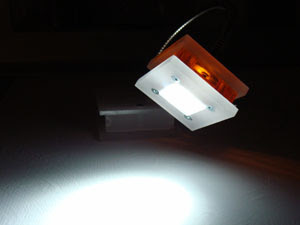
To that effect, our system efficiently combines lighting and fragrance diffusion. It re-cycles the low heat energy of its light source and uses it to diffuse essences placed in small perfume containers. Thanks to the low power consumption of its advanced solid state source, the temperature in the containers remains close to that of the human body temperature, and participate in very natural fragrance diffusion.
Light gives life, whether it is life in the larger sense or life in the individual home. So it is natural to place rigorous demands on the lamps that illuminate our surroundings. The Patanjali® Perfume Diffuser is a fusion of rigorous design and careful craftsmanship. This perfume diffuser is very unique in design, very modern yet not too flashy. Whether on or off, it ensures a functional lighting, and at the same time offers an aesthetic experience. The subtle shade prevents the light from glaring, yet it can light up the ambiance of a room.
The Patanjali® Perfume Diffuser transcends its original illuminating function. Its light surprises, suggests contemplation, triggers imagination. Add a sultry scent and you create a complete emotion.
Color is not a physical property of objects, but rather our physiological and psychological response to light reflected by these objects. Carl Ingling once said:
"color is only a pigment of your imagination".
The first impression of the color of a room should not be taken too seriously - it will change with time. Just as the body adapts to the temperature of warm water so will the eye adapt to color.
We commonly describe white light based on associations with other colors. Yellowish white light, perhaps reminding people of a wood fire, is called "warm", while bluish white light is called "cool."
All light sources used in general lighting will gradually shift in appearance to become "white" to the viewer, whether they are “warm” like incandescent lamps and high pressure sodium lamps, or “cool” like daylight. Our color vision tends to compensate and fill in for those colors that are lacking in the light source’s spectrum: red in the case of daylight, blue for incandescent, etc.
As in the case of many other human perceptions, we are only sensitive to variations of color and not to the color value itself. Therefore, the eye's previous state of adaptation is significant. A “warm” space will look even warmer to the occupants if they enter it from a “cold” bluish space. It will look cooler if they come from a yellowish or pinkish one. But then the eye will slowly adapt until the space appears to be lighted with "white" light, no matter what the eye previous adaptation was.
While side-by-side color comparisons are an excellent way to show the differences between two light sources, since the eye never becomes completely adapted to either source but to a combination of both, a proper color evaluation is best achieved:
The ultimate test is to live with the colors for an extended period of time, in that way adaptation effects are accounted for.
The light from an electric light source is not inherently different from the light of the sun and the sky. In effect, visible light sources vary only in the relative amounts of energy at each wavelength. That however, is important because it is visible and we react to visible stimuli.
There is no "best" color lamp, nor is there any formal definition of "true" color. Each light source distorts objects’ colors, whether the light comes from a natural source such as sunshine or sunset, or electric sources such as incandescent, fluorescent or LED.
But there are certainly strong preference factors associated with light and color just as, for example, when people select clothing, furniture or decorations for themselves and their surroundings. The "right" light source for a given application largely depends on these personal preferences, custom and, in growing proportion, on an evaluation of the trade offs in efficiency, cost, and color rendition.
